
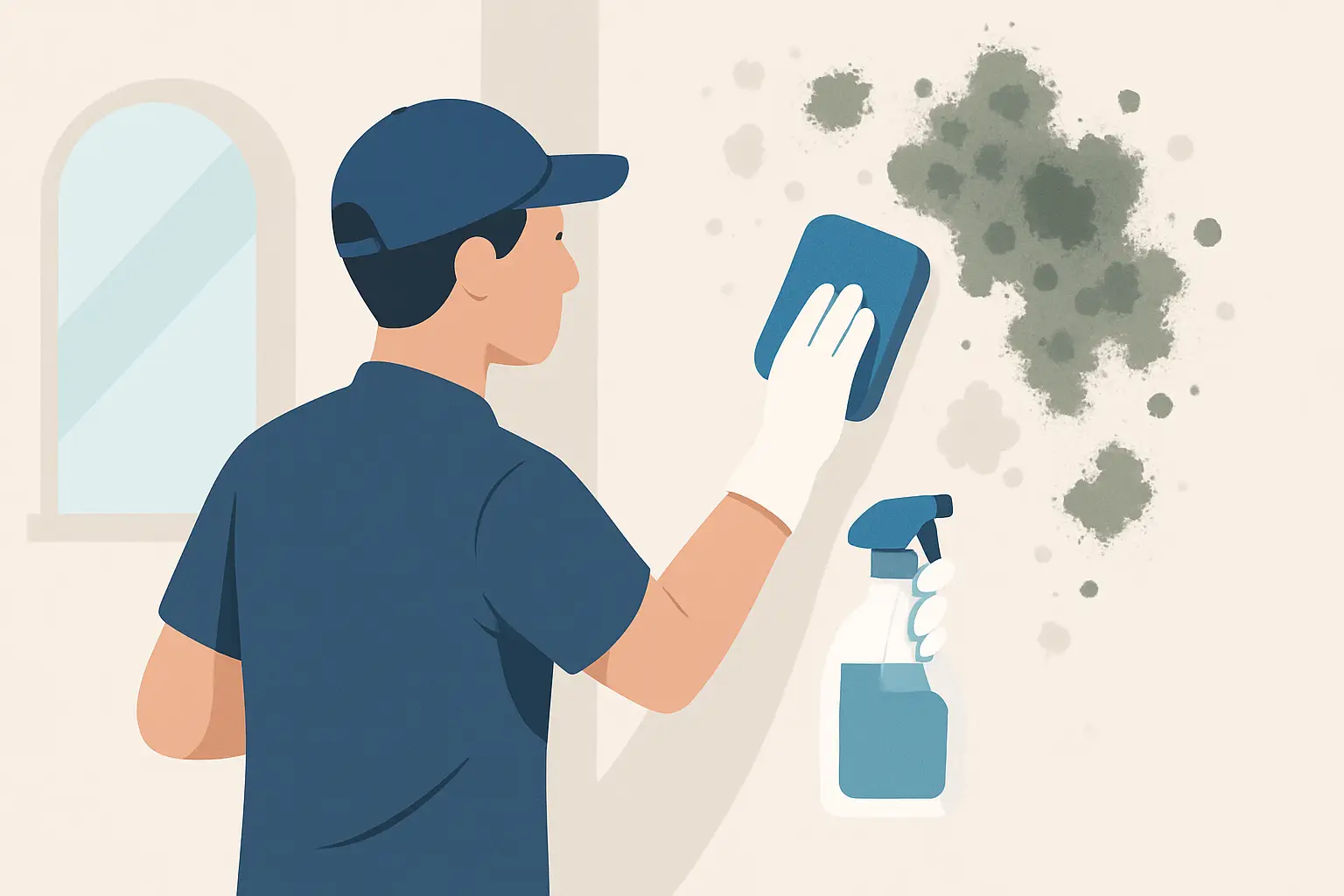
You wipe the wall and the black marks don’t budge. Or worse – the surface looks cleaner, but the stain keeps ghosting back through the paint. That’s the reality with mould: there’s the living growth you can remove, and then there’s the staining and damage it leaves behind. If you only deal with one of those, the problem tends to stick around.
This practical guide explains how to remove mould stains from walls safely and effectively in typical UK homes, rentals, offices, and communal areas – and when it’s smarter to stop and bring in professional help.
Before you start: is it mould, damp staining, or something else?
Most people call any dark mark “mould”, but it helps to know what you’re dealing with because the fix changes.
If it’s mould, you’ll usually see clusters of black, green, or brown spotting, often in corners, behind furniture, around window reveals, or on cold external walls. It can look furry or dusty, and it often returns quickly in the same places.
If it’s a damp stain, it may look like a yellow-brown tide mark, sometimes with bubbling paint or soft plaster. That’s often water ingress (leaks, roof issues, failed sealant) rather than condensation. Bleach-type cleaners might brighten it temporarily, but it will come back until the moisture source is fixed.
If you’re seeing widespread growth, strong musty odours, or recurring patches across multiple rooms, treat it as a moisture problem first, not just a cleaning job.
Safety first: protect yourself and the room
Mould work is messy, and scrubbing can release spores into the air. A few simple steps make a big difference.
Open windows for ventilation and keep the door closed to stop spores travelling through the property. If you can, switch off any fans that blow air into other areas. Wear rubber gloves and an FFP2/FFP3 mask, and consider protective eyewear if you’re working overhead. Old clothes are best – some products will mark fabric.
Remove soft furnishings where possible, and pull furniture a short distance from the wall so you can reach the full patch. Put down an old towel or dust sheet to catch drips, especially if you’re working near carpets or wood floors.
Choosing the right method depends on the wall finish
There isn’t one “best” cleaner for every wall. The safest approach depends on whether you’re dealing with washable paint, matt emulsion, bare plaster, wallpaper, or a tiled surface.
On washable painted walls (often kitchens, bathrooms, hallways), you can usually clean with a dedicated mould wash or a diluted disinfecting solution, then rinse and dry.
On matt paint, older emulsion, or poorly sealed plaster, aggressive scrubbing and harsh chemicals can cause patchiness, lifting, or a shiny “burnished” area. It may still be worth cleaning for hygiene, but you might need stain blocking and repainting afterwards.
On wallpaper, mould can sit on the surface or beneath it. If it’s light surface spotting you may get some improvement, but stained wallpaper often needs replacing because the paper and paste hold moisture and spores.
How to remove mould stains from walls: a reliable step-by-step
Step 1: Dry wipe first (gently)
If the mould looks powdery, start with a gentle dry wipe using disposable paper towel. The goal is to lift loose surface growth without soaking it in and spreading it around. Don’t use a brush on a dry patch – it flicks spores into the air.
Bag and bin what you use straight away.
Step 2: Apply your cleaning solution – don’t flood the wall
A mould and mildew remover or mould wash treatment is usually the most predictable option because it’s designed for this job. If you’re using a household disinfectant, follow the label instructions carefully and never mix products.
Spray onto the cloth rather than directly onto the wall if you’re near sockets, light switches, or painted finishes that mark easily. You want the area damp, not dripping.
Let the product dwell for the recommended time. This matters. Wiping straight off often removes the visible patch but leaves spores behind in the surface texture.
Step 3: Wipe, then repeat where staining remains
Wipe the area with a clean cloth, turning it frequently so you’re not smearing residue back over the wall. If the patch is stubborn, reapply the solution and repeat.
Here’s the trade-off: more pressure and repeated passes can lift staining, but can also damage paint or expose plaster. If you’re cleaning a rental or a high-visibility office wall, it’s often better to accept a faint mark and plan for stain blocking rather than scrubbing until the finish is ruined.
Step 4: Rinse lightly and dry thoroughly
Some products require a rinse, others don’t. If a rinse is needed, use a cloth dampened with clean water and wipe once or twice.
Drying is not optional. Use a dry towel, and if you can, run the heating for a short period and keep the window open. A dehumidifier helps in winter or in properties with limited ventilation.
Step 5: Deal with the stain that’s left behind (stain block)
If the mould is gone but a shadow remains, you’re looking at staining in the paint film or substrate. This is common on external walls and ceilings above showers.
A stain-blocking primer is designed to stop that discolouration bleeding back through. Apply it once the area is fully dry and stable. After that, repaint with a suitable bathroom or kitchen paint where moisture is an ongoing risk.
If you skip stain blocking and just paint over the mark, you often get that familiar “reappearing patch” – not always because mould is back, but because the stain is migrating through.
Common mistakes that make mould stains worse
The biggest mistake is bleaching a patch, seeing it turn lighter, and thinking the job is done. Bleach can discolour staining, but it doesn’t always penetrate porous surfaces well, and it can irritate lungs and skin. It also doesn’t fix condensation patterns, cold spots, or leaks.
Another common issue is soaking the wall. Over-wetting plasterboard or paint can cause bubbling, peeling, or a larger damp patch, which then becomes a better home for mould.
Finally, people often clean the visible patch but ignore what caused it: furniture pushed tight to a cold wall, blocked trickle vents, extractor fans not used long enough, or drying laundry without ventilation.
Stopping mould from returning: what actually works
If mould is driven by condensation, prevention is mainly about reducing moisture and improving airflow. In bathrooms and kitchens, use extractor fans and keep them running for a while after showers or cooking. Wipe down wet window sills and tiles rather than leaving them to air-dry in a cold room.
In bedrooms and lounges, give external walls breathing space. A small gap behind wardrobes and sofas can reduce cold-surface condensation dramatically. Keep consistent background heat in colder months where possible, because big temperature swings encourage moisture to settle on the coldest areas.
If the mould is linked to a leak, cracked render, failed sealant, or plumbing issue, cleaning is only the tidy-up. The building problem must be repaired, then the area dried before you redecorate.
When it’s time to call in professionals
DIY is fine for small, localised patches, especially on washable paint. But there are clear signs you’ll save time and avoid repeat work by getting help.
If mould keeps returning within days or weeks, if it covers a large area, if you’re seeing damaged plaster, or if the property is a rental that needs a reliable turnaround for check-out or move-in, professional damp and mould wash treatment with stain blocking is often the quickest route to a finished result.
For landlords and facilities teams, consistency matters as much as the clean itself: documented work, predictable scheduling, and a result that doesn’t reappear during the next viewing.
If you want a team that arrives fully equipped and handles both the wash and the stain-blocking stage as part of a practical turnaround, Febas Scrub & Mend Pros at https://Www.febasgcs.co.uk can quote around your property type and timeframe.
A final note on expectations
A mould clean can make a wall look dramatically better in an afternoon, but the best results come when cleaning and prevention work together. Aim for a wall that is hygienic, dry, and stable – then make the small changes that keep it that way, so you’re not fighting the same patch every winter.